How a Wife Should Treat Her Husband in Islam: 10 Powerful Principles
Featured Snippet Answer:
Islam teaches a wife to treat her husband with understanding, patience, genuine appreciation, and open love. Key principles include understanding his challenges, praising his good qualities, accepting his imperfections with sabr, never expressing unfounded suspicion, protecting the privacy of the marriage, and not exposing his faults to family. These principles are grounded in the Quranic framework of mawaddah (deep love) and rahmah (mercy) between spouses (Surah Ar-Rum 30:21).
Every marriage contains two people who are trying their best, imperfectly, inconsistently, and sometimes confusingly. A husband brings his own burdens, blind spots, and unspoken needs. A wife brings hers. And the space between them is where a marriage either grows or slowly unravels.
Islam does not leave this space undefined. Through the Quran and the Sunnah of the Prophet Muhammad ﷺ, a detailed and deeply human framework exists for how spouses should treat one another, one that asks for generosity, patience, and wisdom from both sides.
This article focuses on the wife’s side of that relationship: the Islamic principles that guide how a wife can treat her husband in a way that strengthens the marriage, honors Allah, and brings genuine peace and happiness into the home.
These are not cultural obligations or social pressures. They are wisdom, tested across generations, grounded in authentic Islamic sources, and deeply practical for any married Muslim woman who wants her marriage to thrive.
The Quranic Foundation: A Marriage of Garments
Before addressing specific behaviors, it helps to understand how the Quran frames the husband-wife relationship itself:
“They (your wives) are a garment for you and you are a garment for them.”
— Surah Al-Baqarah 2:187
A garment covers, warms, and protects. It is intimate, the closest thing to the body. It conceals what should be concealed. It is worn every day, not just on special occasions. This metaphor defines the kind of closeness, protection, and daily care that Islam envisions between spouses.
And then this verse, perhaps the most important description of a healthy Islamic marriage in the entire Quran:
“And among His signs is that He created for you mates from among yourselves, that you may find tranquility in them; and He placed between you love and mercy.”
— Surah Ar-Rum 30:21
Sukoon (tranquility), mawaddah (deep love), and rahmah (mercy). These three words describe what a marriage should feel like, and they are gifts that Allah placed in the relationship. But like all gifts, they require tending. Here is how a wife tends them.
1. Try to Understand Your Husband’s Inner World
Every person carries struggles that are not always visible. A husband who comes home quiet, distracted, or tired is not necessarily being cold. He may be carrying financial worry, professional pressure, or simply the weight of a difficult day.
A wife who makes the effort to understand what her husband is carrying, not to fix it necessarily but simply to see it, creates an environment of profound emotional safety. He feels known. He feels that his life matters to her, not just his performance as a husband.
This effort to understand is itself an act of love, and it changes the entire quality of the relationship.
2. Do Not Measure Your Husband Against an Ideal
One of the most common sources of marital disappointment is the mental image of the “perfect husband,” the standard against which a real, imperfect man is constantly being measured and found wanting.
Islam is clear: no human being is without flaws. When a wife accepts her husband as he is, with his specific strengths and his specific limitations, rather than comparing him to an imaginary ideal, she frees both of them from a silent, exhausting competition.
More than this, Islam teaches that patience with a spouse’s imperfections is rewarded by Allah. When a wife endures difficulties in her marriage with sabr and sincerity, she is not simply tolerating something. She is accumulating reward with the One who sees everything.
3. Acknowledge and Praise His Good Qualities
Men, like women, need to feel appreciated. A husband whose wife regularly acknowledges his efforts, his hard work, his reliability, his protectiveness, his faithfulness, is a husband who is motivated to give more.
Islam encourages the expression of gratitude (shukr) at every level of life. The Prophet ﷺ specifically warned about ingratitude toward a husband’s kindness, while a wife who is genuinely grateful and expressive creates a home environment that feels safe and cherished for both of them.
Praise his wisdom when he makes a good decision. Acknowledge his sacrifice when he works long hours. Tell him you are proud of him. These are small acts with enormous effects.
“If I were to command anyone to prostrate to another, I would have commanded women to prostrate to their husbands, due to the immensity of his right over her.”
— Prophet Muhammad ﷺ — Sunan al-Tirmidhi (1159)
4. Never Express Doubt About Him, Even as a Joke
Suspicion is one of the most corrosive forces in a marriage. Even when expressed lightly, as a joke, as teasing, as a passing comment, doubt planted in a relationship tends to grow.
Islam warns against suspicion explicitly:
“O you who believe! Avoid much suspicion, for indeed some suspicion is a sin.”
— Surah Al-Hujurat 49:12
When a wife jokes about her husband’s fidelity, or teases him about his interactions with other women, she may intend no harm. But these words do not disappear after they are spoken. They settle. They create a subtle atmosphere of distrust. And when real difficulties arise in the marriage, that atmosphere makes everything harder.
Guard your tongue in this area. What is expressed as humor today can become the lens through which your marriage is eventually viewed.
5. Express Your Love Openly and Consistently
A marriage needs regular, explicit expressions of love: not assumed, not occasional, not only during celebrations. A wife who tells her husband she loves him, who expresses appreciation for him, who makes him feel valued as a person rather than just as a provider, is tending the garden of the marriage.
Islam teaches that a husband sacrifices much for the security, stability, and happiness of his family. Recognizing this sacrifice, out loud, regularly, and sincerely, is one of the most impactful things a wife can do for her marriage.
6. Protect the Privacy of Your Marriage
This principle is one of the most practical, and most violated, in Muslim marriages. What happens inside a marriage is a trust (amanah). It belongs to both spouses. Sharing it, even with parents, even with a best friend, breaks that trust in ways that are very difficult to repair.
“Verily, among the worst of people in the sight of Allah on the Day of Resurrection will be a man who has relations with his wife, and she with him, and then he spreads her secret.”
— Prophet Muhammad ﷺ — Sahih Muslim (1437)
Though this hadith speaks of the husband, the principle applies to both spouses. A wife who shares the details of her marital difficulties with her family creates a situation that is very difficult to undo. Family members hear. They remember. They form opinions. And later, in moments of normal marital tension, they recall what was shared and use it to weigh in, to judge, to take sides.
The couple may resolve their issue in a day. The family may carry the impression for a decade.
7. Do Not Expose Your Family’s Faults to Your Husband
Just as a wife should protect her marriage’s privacy, she should also be careful about exposing her own family’s weaknesses and problems to her husband in unguarded moments of frustration or closeness.
What is shared in intimacy can later be used against you. A husband who has been told about dysfunction, bad behavior, or shameful episodes in his wife’s family will carry that information, and it may color how he views her, her children, and her character for years to come.
Share what needs to be shared for practical reasons. But guard your family’s dignity as carefully as you guard your marriage’s privacy.
8. Adapt Your Life to Fit Your Shared Life
Marriage asks both partners to adapt, to grow in directions they would not have grown alone, to accommodate preferences and rhythms that are not entirely their own. This is not a loss of self. It is the building of something larger than either person alone.
A wife who makes a genuine effort to align her life with her husband’s, his schedule, his energy, his way of doing things, often finds that this creates a richness and depth of companionship that isolation cannot offer. This is the “new world” that a truly shared life opens up.
9. Never Belittle Him or Hold His Mistakes Against Him
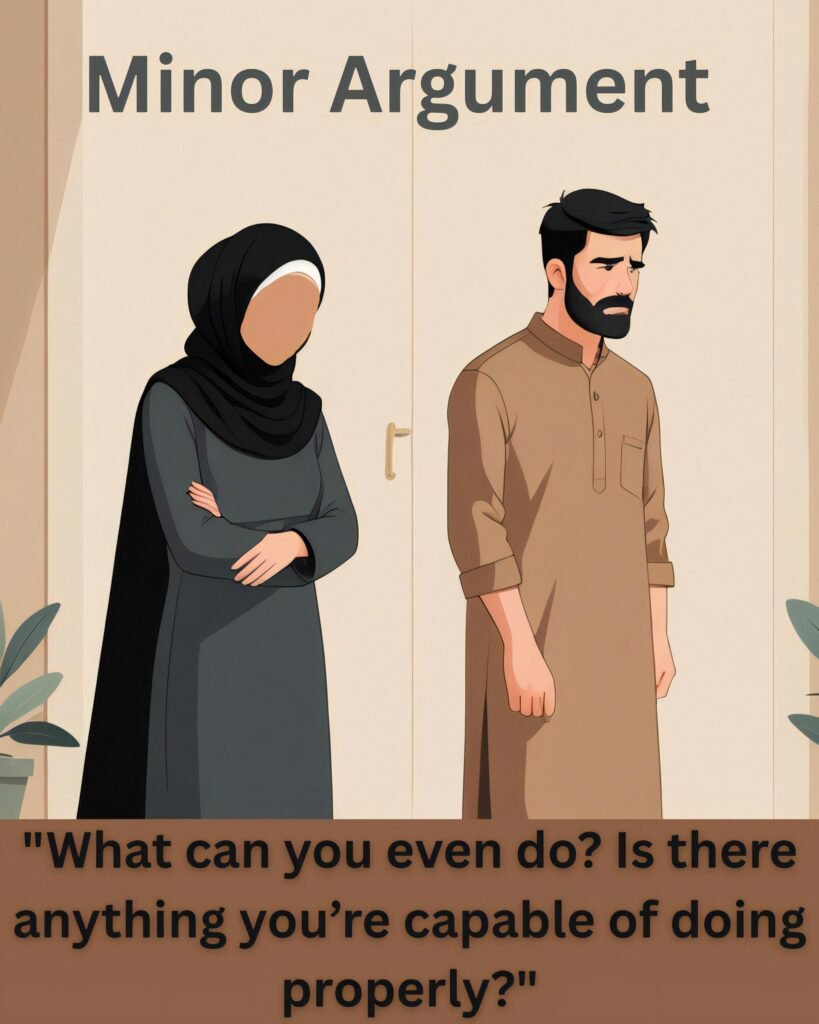
In moments of conflict, the temptation to attack the person rather than the problem is enormous. “If you weren’t so stubborn, we wouldn’t be in this situation”: this kind of statement does not resolve anything. It wounds. And wounds in a marriage accumulate.
Islam calls for ihsan (excellence) in how we treat others. In marriage, ihsan means remembering, even in moments of frustration, that this is the person who has stood by you, provided for you, and chosen you, day after day. The right response to his mistakes is not contempt. It is the same grace you would hope he extends to yours.
10. Trust the Structure Allah Has Given the Marriage
Islam places the responsibility of qiwamah (guardianship and leadership) on the husband. This does not mean a wife has no voice, no opinion, or no influence. It means that within the marriage, the ultimate responsibility for the family’s direction lies with the husband.
A wise wife does not try to usurp this responsibility. She contributes her wisdom, her perspective, and her love freely. She speaks her mind in the appropriate time and way. But she does not try to control, because control in a marriage produces neither happiness nor respect. It produces resistance.
The Prophet Muhammad ﷺ said:
“The best of you are those who are best to their wives.”
— Prophet Muhammad ﷺ — Sunan al-Tirmidhi (3895)
This hadith is directed at husbands. But it defines the standard of an Islamic marriage: one where both partners are trying, consistently, to be the best version of themselves for the person they chose. A wife who embodies these principles is not simply fulfilling obligations. She is building something, a home, a relationship, a legacy, that reflects the mercy and wisdom of the Creator who designed it.
Final Word: A Happy Wife and a Happy Marriage
Everything in this article serves one purpose: not the husband’s happiness at the expense of the wife’s, but the happiness of the marriage itself, which is the container that holds both of their lives.
A wife who understands her husband, appreciates him, protects their privacy, expresses her love, and extends grace even in difficulty is not diminishing herself. She is investing in the most important relationship of her earthly life. And Allah, who sees every act of patience and every word of kindness spoken in a marriage, does not let those investments go unnoticed.
May Allah fill every Muslim home with sukoon, mawaddah, and rahmah. May He make every wife and every husband a source of peace and goodness for the other. And may He make our marriages among the deeds that carry us toward Jannah. Ameen.
Frequently Asked Questions
Q: How should a Muslim wife treat her husband according to Islam?
Islam teaches a wife to treat her husband with understanding, genuine appreciation, patience with his imperfections, protection of marital privacy, and open expressions of love. These principles are grounded in the Quranic framework of mawaddah (love) and rahmah (mercy) between spouses (Surah Ar-Rum 30:21) and the Prophet’s teachings on mutual goodness.
Q: What are a wife’s responsibilities toward her husband in Islam?
A wife’s responsibilities include understanding her husband’s challenges, praising his good qualities, accepting his imperfections with patience, protecting the privacy of the marriage, not sharing his faults with family members, expressing love consistently, and supporting the household structure that Islam has established through the concept of qiwamah.
Q: Is a wife allowed to share her husband’s problems with her family in Islam?
This is strongly discouraged. Islam describes spouses as garments for each other (Al-Baqarah 2:187), meaning they cover and protect one another. Sharing a husband’s faults or marital problems with family creates lasting impressions that damage the marriage’s dignity. What others hear, they rarely forget, even when the couple has moved on.
Q: How can a wife praise her husband in an Islamic marriage?
A wife can praise her husband by acknowledging his specific qualities: his reliability, his hard work, his honesty, his protectiveness. She can express gratitude for his efforts verbally and consistently. Islamic teaching on shukr (gratitude) applies fully within marriage, and expressing thanks to a spouse is itself an act of worship and a source of barakah.
Q: What does Islam say about suspicion between husband and wife?
Surah Al-Hujurat 49:12 warns believers to avoid much suspicion, as some suspicion is a sin. In marriage, even joking expressions of doubt about a spouse can gradually erode trust. Islam teaches that a believing wife should give her husband the benefit of the doubt and guard against allowing unfounded suspicion to take root in the relationship.
View Muslim Fashion T-Shirt Design Here: SHOP NOW