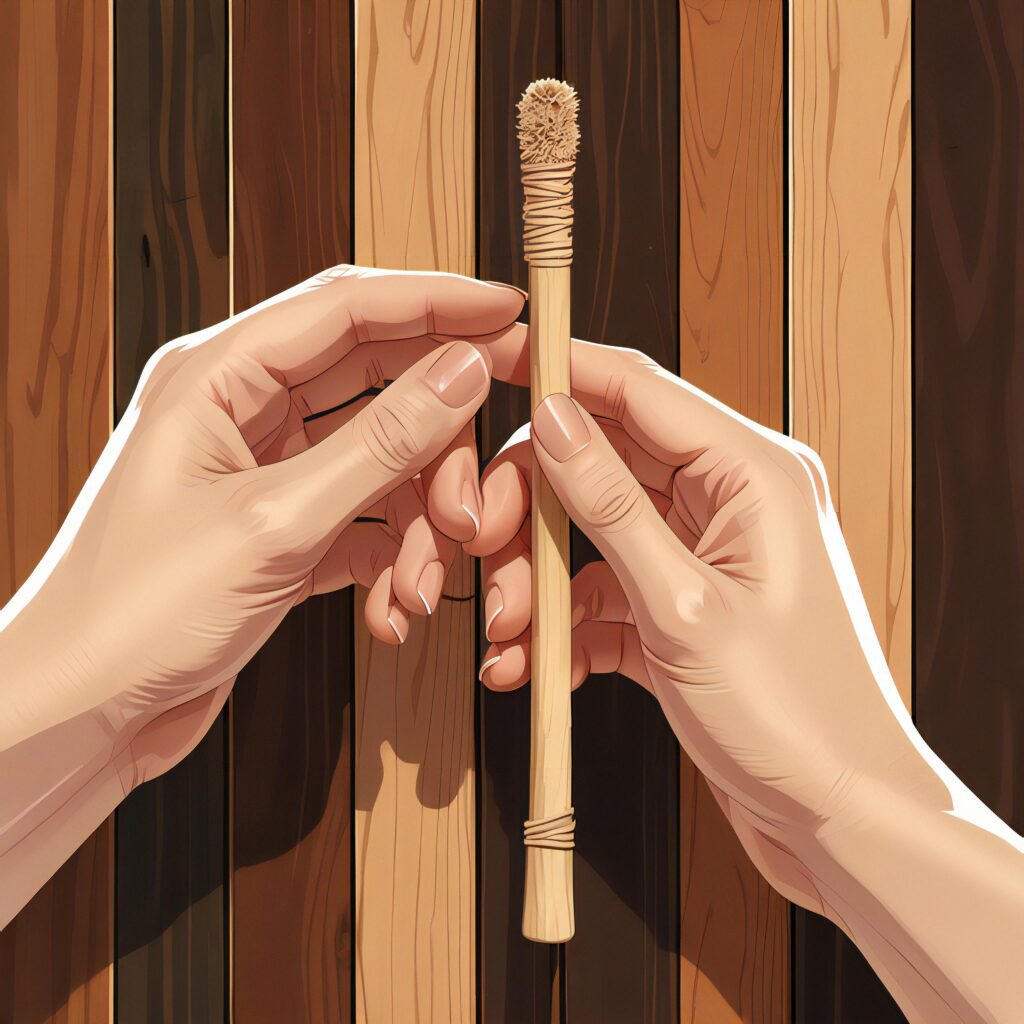
Miswak in Islam
Benefits of Miswak
“If it were not a hardship for my Ummah, I would have made the use of miswak obligatory for them at every ablution (wudu).” Sahih al-Bukhari: 847, Sahih Muslim: 252
“Using the miswak purifies the mouth and pleases Allah.” Sunan an-Nasa’i: 5 (Authentic chain)
“The Prophet ﷺ used to use the miswak before every one of the five daily prayers.” Sahih Muslim: 253
“When the Prophet ﷺ woke up from sleep, he would use the miswak.” Sahih al-Bukhari: 245
“Miswak is a Sunnah in Islam and increases oral cleanliness.” Jami` at-Tirmidhi: 287

View Muslim Fashion T-Shirt Design Here: Shop Now
Authentic Hadith About the Benefits of Miswak
In Islam, cleanliness is a core part of faith, encompassing both spiritual and physical purity. Among the beautiful prophetic practices that highlight this harmony is the use of the miswak (natural tooth-cleaning stick). The authentic hadith literature repeatedly emphasizes its virtue, benefits, and consistent practice by the Prophet Muhammad ﷺ. Exploring these narrations reveals not only the importance of oral hygiene in Islam but also the spiritual rewards attached to this simple Sunnah.
Miswak: A Sunnah Loved by the Prophet ﷺ
One of the most well-known hadith about miswak demonstrates how strongly the Prophet ﷺ encouraged its use:
“If it were not a hardship for my Ummah, I would have made the use of miswak obligatory for them at every ablution (wudu).”
— Sahih al-Bukhari 847; Sahih Muslim 252
This hadith shows that miswak is not merely recommended—it is among the most emphasized Sunnahs. Scholars explain that anything the Prophet ﷺ considered close to obligatory indicates immense virtue and benefit. The fact that he mentioned miswak alongside wudu, the foundational act of purification before prayer, underscores its importance in preparing for worship.
Miswak Purifies the Mouth and Pleases Allah
Another authentic narration beautifully combines physical and spiritual benefits:
“Using the miswak purifies the mouth and pleases Allah.”
— Sunan an-Nasa’i 5 (authentic)
This concise hadith captures the essence of Islamic hygiene: cleanliness that earns divine pleasure. The mouth is the gateway for recitation of Qur’an, remembrance (dhikr), and supplication (du‘a). Keeping it clean is therefore both a health practice and an act of devotion. When a Muslim uses miswak with the intention of following the Sunnah, even routine oral care becomes worship.
The Prophet’s Consistent Practice
Authentic reports show that the Prophet ﷺ used miswak regularly throughout the day:
“The Prophet ﷺ used to use the miswak before every one of the five daily prayers.”
— Sahih Muslim 253
“When the Prophet ﷺ woke up from sleep, he would use the miswak.”
— Sahih al-Bukhari 245
These narrations demonstrate consistency—a hallmark of beloved deeds in Islam. Using miswak upon waking removes oral odor and prepares the believer for remembrance of Allah at the start of the day. Using it before prayer ensures cleanliness when standing before the Creator. Together, these practices establish miswak as part of a daily routine rooted in mindfulness and purity.
Miswak as a Sunnah of Oral Cleanliness
The hadith literature also explicitly identifies miswak as a Sunnah practice:
“Miswak is a Sunnah in Islam and increases oral cleanliness.”
— Jami‘ at-Tirmidhi 287
Islam’s guidance often anticipates modern health knowledge. Today, dental science confirms that mechanical cleaning of teeth and gums prevents decay and disease. Miswak naturally contains antibacterial properties and gentle fibers that clean tooth surfaces. Thus, the prophetic tradition integrates spiritual obedience with tangible health benefits.
Spiritual Lessons from the Miswak Sunnah
Reflecting on these authentic hadith reveals several deeper lessons:
1. Islam encourages hygiene as worship.
Cleanliness is not merely cultural—it is an act that pleases Allah when done with intention.
2. Small acts can carry great reward.
Using miswak takes seconds yet earns divine pleasure and follows the Prophet ﷺ.
3. Consistency matters more than difficulty.
The Prophet ﷺ practiced miswak regularly in daily moments—before prayer, after sleep—showing that beloved deeds are simple but steady.
4. Preparation for worship is honored.
Purifying the mouth before prayer or Qur’an recitation reflects respect for sacred acts.
Reviving the Miswak in Modern Life
In today’s world of toothbrushes and toothpaste, the Sunnah of miswak remains easy to practice. Scholars note that its reward is attained whether used alone or alongside modern dental tools. Incorporating miswak into daily routines—before salah, after waking, before Qur’an recitation—revives a prophetic habit and connects believers to the lived example of the Messenger ﷺ.
Conclusion
The authentic hadith about miswak highlight a profound truth: Islam unites bodily care with spiritual growth. The Prophet ﷺ loved the miswak so much that he nearly made it obligatory for his Ummah. He used it consistently, praised its purity, and linked it to Allah’s pleasure. By reviving this simple Sunnah, Muslims gain both oral cleanliness and spiritual reward—demonstrating that even the smallest prophetic practices carry immense blessing.
#Miswak #Sunnah #Hadith #IslamicHygiene #PropheticTradition #MuslimLifestyle #IslamicReminder #OralCleanliness #Wudu #IslamicPost