A Good Spouse Is a Huge Blessing From Allah: The Complete Islamic Perspective
Featured Snippet Answer:
A righteous, loving spouse is considered one of the greatest blessings Allah can give a person. The Quran (Surah Ar-Rum 30:21) describes marriage as a source of tranquility, love, and mercy. A good spouse strengthens a person’s faith, supports them through hardship, and helps secure success in both this world and the hereafter.
There is a quiet kind of wealth that does not show up in a bank account, a degree certificate, or a property deed — yet it shapes the entire trajectory of a person’s life. It is the wealth of having a spouse who is righteous, kind, patient, and devoted.
In a world that often measures success by income, appearance, or social status, Islam offers a different lens. A good spouse, the Quran and Sunnah tell us, is not a small matter — it is one of the most significant blessings (ni’mah) a person can receive from Allah.
This article explores why Islam places such enormous value on a righteous spouse, what the Quran and Hadith say about this blessing, and what qualities define a spouse who can truly transform both your worldly life and your eternal one.
The Quranic Foundation: Marriage as a Sign of Allah’s Mercy
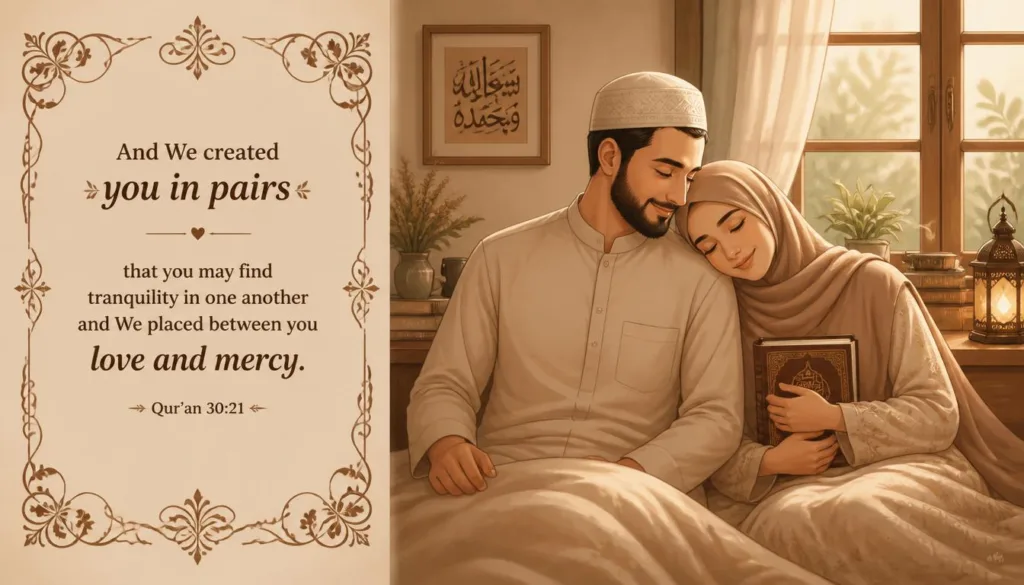
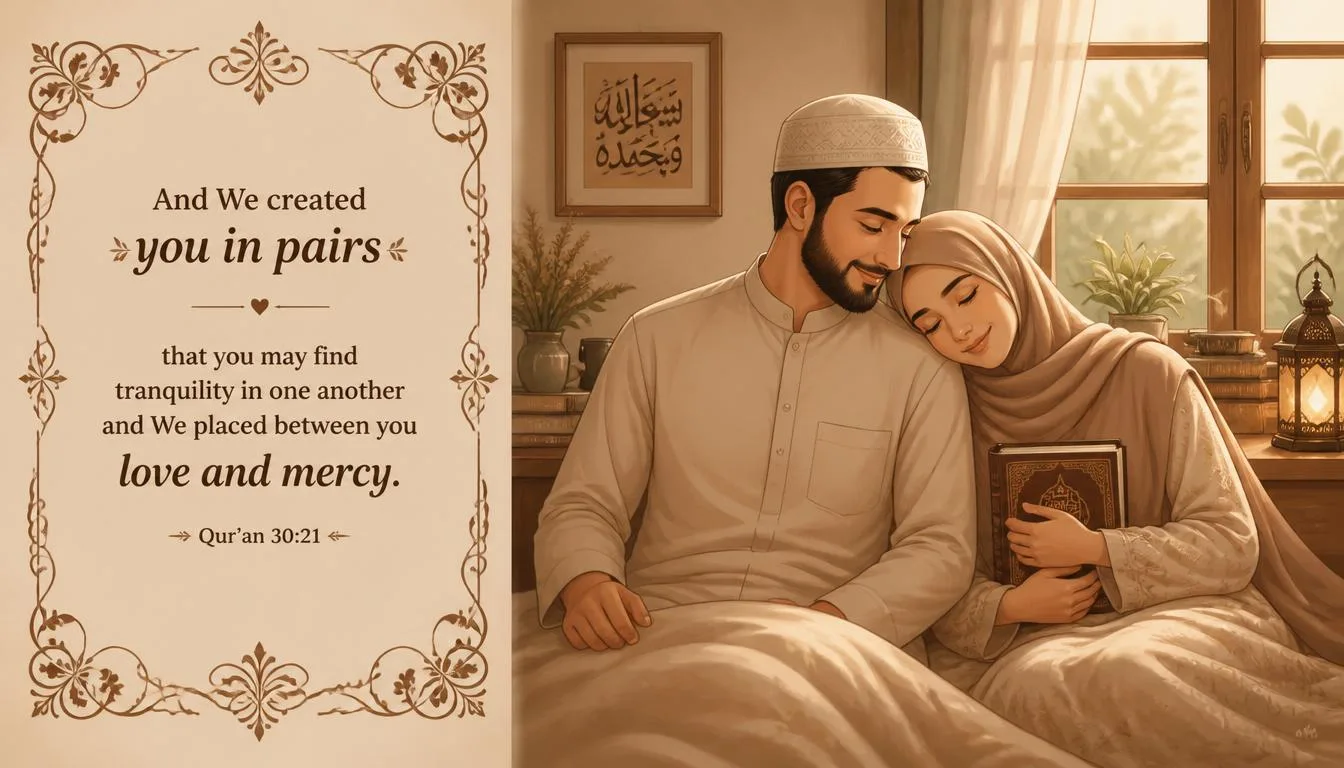
Among the most beautiful verses in the Quran describing marriage is found in Surah Ar-Rum, where Allah does not simply call marriage a contract or a social arrangement — He calls it a sign (ayah) of His power and mercy.
“And among His signs is that He created for you mates from among yourselves, that you may find tranquility in them; and He placed between you love and mercy.”
— Surah Ar-Rum 30:21
Notice the three gifts described in this single verse: sukoon (tranquility), mawaddah (deep, affectionate love), and rahmah (mercy and compassion). These are not minor emotional bonuses — they are foundational human needs. A person who finds these three things in their spouse has, in a very real sense, found a treasure.
When a marriage embodies these qualities, the home becomes a refuge — a place where a person can recharge from the difficulties of the outside world, where their flaws are met with patience rather than ridicule, and where their successes are celebrated rather than envied.
Why a Righteous Spouse Is “Half of Your Faith”
There is a well-known saying among Muslims that marriage to a righteous person completes half of one’s deen (faith). This is not an exaggeration — it reflects a profound reality.
A spouse is the person closest to you, the one who sees you in your best and worst moments, who knows your habits, your weaknesses, and your private struggles. If that person is someone who fears Allah, encourages you toward good, and gently corrects you when you stray — their influence on your spiritual life is immense.
“When a man marries, he has completed half of his religion, so let him fear Allah regarding the remaining half.”
— Attributed in various collections; widely cited in Islamic marriage guidance
A righteous spouse becomes, in effect, a partner not just in worldly matters but in the journey toward Allah. They remind you to pray when you forget. They encourage patience when you are tested. They help you avoid sins that loneliness or temptation might otherwise lead you toward. This is why the Quran and Sunnah place such emphasis on choosing — and being — a righteous spouse.
Choosing Deen Over Dunya: What the Prophet Taught About Spouse Selection
In a culture that often prioritizes wealth, beauty, family status, or career when searching for a spouse, the Prophet Muhammad (peace be upon him) offered guidance that reorients these priorities entirely.
He taught that while these worldly factors are not irrelevant, the defining quality — the one that should weigh most heavily — is a person’s relationship with Allah: their taqwa (God-consciousness), their character, and their commitment to living according to Islamic principles.
This is not because wealth, beauty, or status are bad. It is because these things are temporary and unreliable as foundations for a lasting marriage. Wealth can be lost. Beauty fades with age. Social status can shift. But a person’s character — their honesty, patience, kindness, and fear of Allah — tends to remain, and it is this character that determines how they will treat you on your best days and, more importantly, on your worst.
The Qualities of a Good Spouse in Islam
Based on the teachings of the Quran and Sunnah, several qualities consistently emerge as markers of a spouse who can be a true source of blessing:
1. Taqwa — God-Consciousness
A spouse who is mindful of Allah in their daily life — in their prayers, their honesty, their dealings with others — brings a stabilizing spiritual foundation to the marriage. Their fear of Allah translates into trustworthiness, fairness, and accountability in the relationship.
2. Patience During Difficult Moments
Every marriage faces moments of tension, miscommunication, or stress. A spouse who can remain calm, who does not lash out in anger, and who chooses to de-escalate rather than escalate conflict, protects the marriage from unnecessary wounds.
3. Willingness to Forgive
No human being is free of mistakes. A good spouse is one who, when wronged, chooses to forgive rather than hold grudges — understanding that mercy strengthens a relationship far more than score-keeping ever could.
4. Mutual Respect
A good spouse honors their partner’s dignity — in private and in public. They do not belittle, mock, or speak disrespectfully, recognizing that honor and gentleness are core Islamic values within marriage.
5. Standing Together Through Hardship
Life inevitably brings difficulty — financial strain, illness, loss, or disappointment. A spouse who remains supportive and present during these times, rather than retreating or blaming, reflects the loyalty Islam expects within marriage.
6. Helping Each Other Avoid Sin
Perhaps one of the most overlooked qualities: a good spouse actively helps their partner stay away from haram — whether that means providing emotional and physical companionship that reduces temptation, or gently steering each other away from bad habits and toward better ones.
The Ripple Effect: How a Good Spouse Shapes a Whole Life
The impact of a righteous spouse extends far beyond the two people in the marriage. Children raised in a home built on mawaddah and rahmah absorb these values and carry them into their own future relationships. Extended family relationships often become smoother when both spouses approach in-laws with patience and respect. Even one’s relationship with Allah can deepen, as a supportive spouse becomes a partner in worship — praying together, reading Quran together, and reminding each other of the akhirah.
In contrast, a marriage lacking these qualities — where impatience, disrespect, or heedlessness toward Allah dominate — can become a source of constant stress, regardless of how much wealth or social status the couple may have. This is precisely why the Quran and Sunnah place such emphasis on character and faith over external appearances.
A Dua for a Righteous Spouse
For those seeking a spouse, or those wishing to strengthen the blessing they already have, the Quran provides a beautiful supplication that Muslims have recited for centuries:
“Our Lord, grant us from among our spouses and offspring comfort to our eyes.”
— Surah Al-Furqan 25:74
This dua reflects a beautiful truth: a righteous spouse is not just a partner for managing daily life — they are meant to be a source of comfort, joy, and peace to the eyes and heart. This is the standard Islam sets, and it is a standard worth striving for, whether one is searching for a spouse or working to become — and to appreciate — a righteous one.
A Final Word: Gratitude for the Blessing
Wealth can buy comfort, but it cannot buy peace of mind in a troubled marriage. Beauty can catch the eye, but it cannot sustain a relationship through illness, hardship, or old age. What endures — what truly transforms a person’s dunya and akhirah — is a spouse who fears Allah, who treats their partner with mercy, and who walks alongside them on the path toward Jannah.
If you have been blessed with such a spouse, recognize it as the ni’mah it is, and thank Allah for it often. And if you are seeking one, let your search be guided not by what glitters, but by what lasts: deen, character, and the love and mercy that Allah Himself describes as signs of His own mercy toward us.
May Allah grant every one of us a spouse who brings peace to our hearts and closeness to Him. Ameen.
FAQ
Q: Why does Islam call a good spouse a blessing from Allah?
Because a righteous spouse brings tranquility (sukoon), love (mawaddah), and mercy (rahmah) into a person’s life (Surah Ar-Rum 30:21), strengthens their faith, supports them through hardship, and contributes to their success in both this life and the hereafter.
Q: What qualities should I look for in a spouse according to Islam?
Islam emphasizes taqwa (God-consciousness), patience, willingness to forgive, mutual respect, supportiveness during hardship, and helping one another avoid sin. The Prophet (peace be upon him) advised prioritizing religious commitment over wealth, beauty, or lineage.
Q: What does the Quran say about love between husband and wife?
Surah Ar-Rum (30:21) states that Allah created spouses for one another so they may find tranquility, and placed love (mawaddah) and mercy (rahmah) between them — describing this as one of His signs.
Q: Why is marrying a righteous person said to complete half of one’s faith?
Because a righteous spouse becomes a daily companion in faith — reminding you of prayer, encouraging good character, and helping you avoid sin — making them a partner in your spiritual journey, not just your worldly one.
Q: Is there a specific dua to ask Allah for a good spouse?
Yes. Surah Al-Furqan (25:74) contains the dua: “Rabbana hab lana min azwajina wa dhurriyyatina qurrata a’yunin” — “Our Lord, grant us from among our spouses and offspring comfort to our eyes.”
View Muslim Fashion T-Shirt Design Here: SHOP NOW