A Mother’s Role in Teaching Children to Value Their Father’s Sacrifice
Featured Snippet Answer: A mother plays a pivotal role in helping children understand and appreciate their father’s silent sacrifices. By explaining the value of the father’s hard work, modeling gratitude, and teaching empathy from a young age, a mother bridges the emotional gap between children and their father — building a stronger, more grateful family rooted in Islamic values.
Every evening, the same scene plays out in millions of homes. A father walks through the door after a long, exhausting day — quiet, drained, and carrying the invisible weight of a thousand responsibilities. And just as often, his children barely look up.
They are not unkind children. They simply do not yet understand what their father has been doing all day, or why. They have never been taught to see the connection between his absence and their comfort.
This is where a mother’s role becomes one of the most spiritually significant acts she can perform — not just for her family, but as an act of worship in itself.
View Muslim Fashion T-Shirt Design Here: SHOP NOW


The Father as the Family’s Backbone — and the Mother as Its Gardener
In Islamic family structure, the father carries qiwamah — the duty of guardianship and provision. He is, as many scholars beautifully describe, like a great tree: standing in the scorching sun so his children can live in the shade.
But a tree’s shade is only felt when you know it is there. Children need someone to point upward and say, “Look. This tree stands because of your father.”
That someone is the mother.
A mother is not merely a caregiver — she is the primary shaper of how her children perceive their world, their family, and ultimately, their father. The values she plants in her children’s hearts in the early years become the roots of how they will treat others — and how they will one day raise their own families.
“And We have enjoined upon man to be good to his parents.” — Surah Al-Ahqaf 46:15
Notice that Allah enjoins goodness toward both parents — not one. The mother’s responsibility in raising children who honor their father is not optional; it is part of fulfilling this Quranic command.
Why Children Misread a Father’s Absence
Modern life has created a painful illusion. Children see their friends’ fathers attending school events, playing in parks, and spending relaxed weekends at home. When their own father cannot be present in the same way — because he is working overtime, traveling for work, or simply too exhausted to engage — children can interpret this as indifference.
This misreading is natural. Children think in concrete terms. They understand presence and absence more easily than sacrifice and provision.
The danger is real: if a mother stays silent, this misunderstanding can harden into resentment. The child grows up feeling unloved by their father — not because the love was absent, but because no one translated it for them.
“The father is the middle gate of Paradise, so it is up to you whether you lose that gate or protect it.” — Prophet Muhammad ﷺ — Sunan Ibn Majah (3663)
This hadith reminds us that the father-child relationship carries immense spiritual weight. A mother who helps her children honor their father is, in a very real sense, helping to protect their path to Jannah.
What Mothers Should Teach — A Practical Islamic Guide
1. Teach the Value of Hard Work
When your child enjoys a good meal, wears clean clothes, or attends a good school — pause. Connect that moment to their father explicitly. Say, “Do you know why we have this? Because your father woke up early this morning and worked hard for our family.”
Children are extraordinarily receptive to these small narrations. Repeated consistently, they build a mental framework where provision equals love — and where they see their father as a giver, not an absentee.
2. Build a Culture of Gratitude (Shukr)
Islam places immense emphasis on shukr — gratitude. The Quran states in Surah Ibrahim (14:7) that those who are grateful will receive increase from Allah. A mother who raises grateful children is not just building family harmony; she is shaping souls that Allah will bless.
“If you are grateful, I will surely increase you in favor.” — Surah Ibrahim 14:7
Encourage children to thank their father — not just occasionally, but as a habit. Teach them to notice the small things: the car that takes them to school, the roof over their heads, the security they feel at night. These are not accidents. They are the fruits of their father’s daily sacrifice.
3. Teach Empathy Through the Father’s Tiredness
When a father comes home exhausted, this is a teaching moment — not an inconvenience. Gently guide your children: “Baba is tired because he worked hard for us today. Let’s give him a hug and let him rest.”
Ask them to bring him a glass of water. Encourage them to sit quietly near him, or to greet him with a smile. These small acts of empathy, practiced from childhood, produce adults who are compassionate, emotionally intelligent, and deeply connected to their families.
The Prophet Muhammad ﷺ was known for his gentleness at home. He mended his own shoes, helped around the house, and greeted his family with warmth. These stories, shared with children, become living lessons in how love is expressed through small, consistent acts of care.
4. Never Speak Negatively About the Father
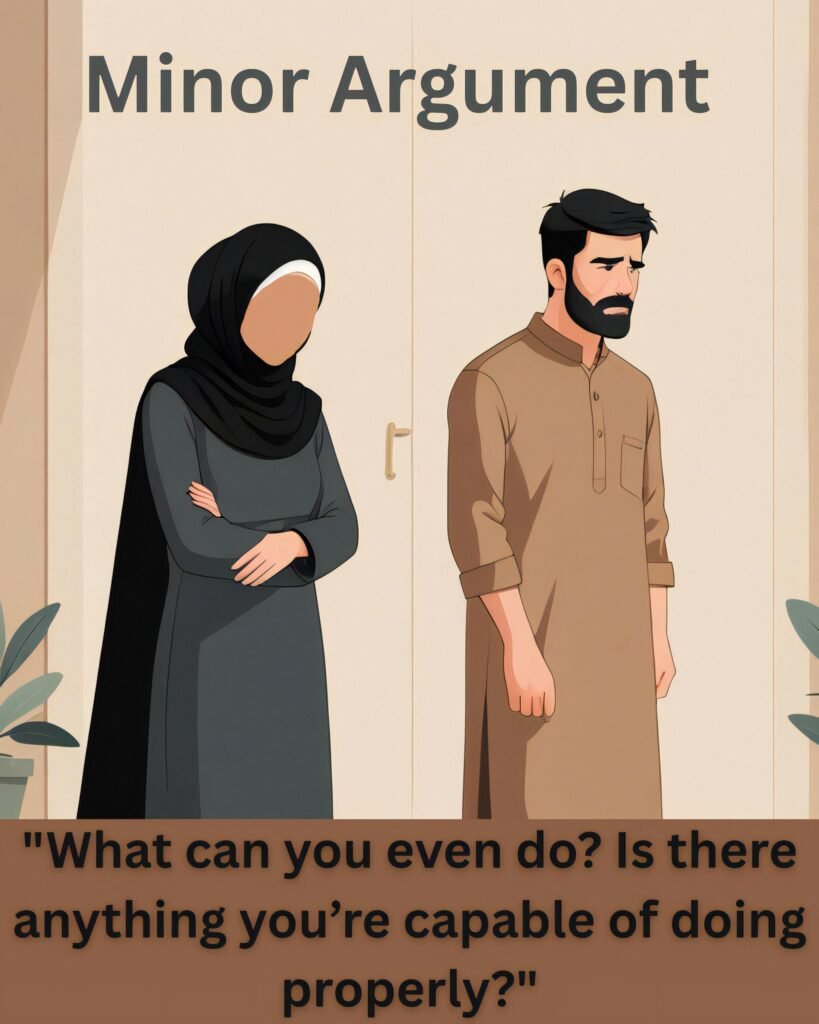
This point cannot be overstated. A mother’s words carry extraordinary authority in a child’s mind. A single negative comment about the father — made in frustration, in passing, or overheard accidentally — can plant seeds of disrespect that take years to uproot.
This does not mean pretending that disagreements do not exist. It means choosing the right time, the right place, and the right words — and never using children as emotional sounding boards for marital frustrations.
The Prophet ﷺ said: “The best of you are those who are best to their families.” (Tirmidhi, 3895) This cuts both ways — and the family a mother shapes begins with how she speaks about its father.
The Ripple Effects on the Whole Family
When a mother consistently highlights a father’s sacrifice and builds gratitude in her children, the benefits reach far beyond the parent-child relationship.
- Father’s exhaustion lifts: When a father returns home to find his children rushing to embrace him, his fatigue dissolves. He feels seen, valued, and motivated to continue giving.
- Children’s emotional intelligence grows: Children raised with this awareness develop a nuanced understanding of love — that it is not always loud or visible, and that some of the deepest love comes wrapped in silence and sacrifice.
- Marital bond strengthens: A wife who publicly honors her husband’s contributions creates a home environment of respect. This often leads to a husband who is more emotionally present and affectionate in return.
- Family unity deepens: Children who grow up seeing both parents speak well of each other develop a profound sense of security and are far more likely to replicate this culture in their own future homes.
The Mother’s Reward in Islam
It is worth pausing to acknowledge something often overlooked: this role — quietly shaping a child’s perception, building gratitude, bridging emotional gaps — is invisible work. It does not get celebrated. It does not appear on a resume. But in the sight of Allah, it is among the most consequential things a human being can do.
“A man came to the Prophet ﷺ and asked: ‘Who is most deserving of my good companionship?’ He said: ‘Your mother.’ The man asked: ‘Then who?’ He said: ‘Your mother.’ The man asked: ‘Then who?’ He said: ‘Your mother.’ The man asked: ‘Then who?’ He said: ‘Your father.'” — Sahih al-Bukhari (5971)
The mother who uses this immense influence to raise children who love and honor their father has done something remarkable: she has turned her daily, invisible labor into sadaqah jariyah — ongoing charity — whose effects will ripple through generations.
A Final Word: Two Pillars, One Home
The father is the backbone of the family. But a backbone is only as strong as the body that surrounds it. The mother is the heart of that body — and it is her steady, wise, and compassionate guidance that transforms a house into a home.
Let us raise children who do not take their father’s provision for granted. Let us raise children who see the weariness in their father’s eyes and feel gratitude rather than indifference. Let us raise children who will one day say, with full sincerity: “My father gave everything for us — and my mother made sure we knew it.”
That is a legacy worth leaving. And in the eyes of Allah, it is one of the most beautiful things a mother can do.
FAQ
Q: Why is a mother’s role important in the father-child relationship? In Islamic family structure, the mother is the primary shaper of a child’s emotional world and values. Because fathers are often absent due to work, children can misinterpret this as emotional distance. A mother’s guidance helps children understand their father’s sacrifices, preventing resentment and building a stronger, more grateful family.
Q: How can I teach my child to appreciate their father’s hard work? Connect everyday comforts — food, clothing, education — directly to the father’s effort. Use specific language: “Baba worked very hard today so we could have this.” Encourage small acts of care like greeting him warmly or bringing him water. Repeat these lessons consistently from an early age.
Q: What does Islam say about honoring your father? Islam places great emphasis on honoring both parents. Allah commands goodness toward parents in Surah Al-Ahqaf (46:15) and Surah Al-Isra (17:23). The Prophet ﷺ described the father as “the middle gate of Paradise” (Ibn Majah, 3663), indicating that the father-child relationship has profound spiritual significance.
Q: Should a mother ever speak negatively about the father in front of children? No — Islam strongly discourages this. A mother’s words carry enormous authority in a child’s mind. Negative comments about the father, even made casually, can plant seeds of disrespect that are difficult to uproot. Disagreements should be addressed privately and constructively, never through the children.
Q: How does teaching gratitude toward the father benefit the whole family? When children are taught to appreciate their father, the benefits are far-reaching: the father feels valued and energized, children develop emotional intelligence and empathy, the marital bond strengthens, and the family builds a culture of shukr (gratitude) that aligns with core Islamic values and produces long-term well-being for everyone.