
Why Are You Getting Married? Think Before You Do — The Islamic Wisdom That Changes Everything
Featured Snippet Answer:
The right reason to get married in Islam is to seek a righteous, God-fearing spouse — to marry for deen. The scholar Sufyan ibn Uyaynah (Hilyat al-Awliya 7/289) taught that whoever marries for deen will receive honour and wealth alongside their faith, while those who marry for status or wealth often receive the opposite.
There is a question most people never ask themselves before they get married — and it might be the most important question of all:
Why are you getting married?
Not “who are you marrying?” Not “when?” or “where?” But why. What is the driving force behind this decision? What are you hoping marriage will give you?
For many people, the honest answer is one of three things: status, money, or attraction. They want to marry into a respected family. They want a financially secure future. They are drawn to someone’s looks or personality and feel a powerful pull toward them.
None of these are necessarily wrong. But over twelve centuries ago, one of the greatest scholars in Islamic history gave a warning so precise and so timeless that it reads like a diagnosis of modern marriage failures. His name was Sufyan ibn Uyaynah, and what he said has never stopped being relevant.
The Story That Started It All
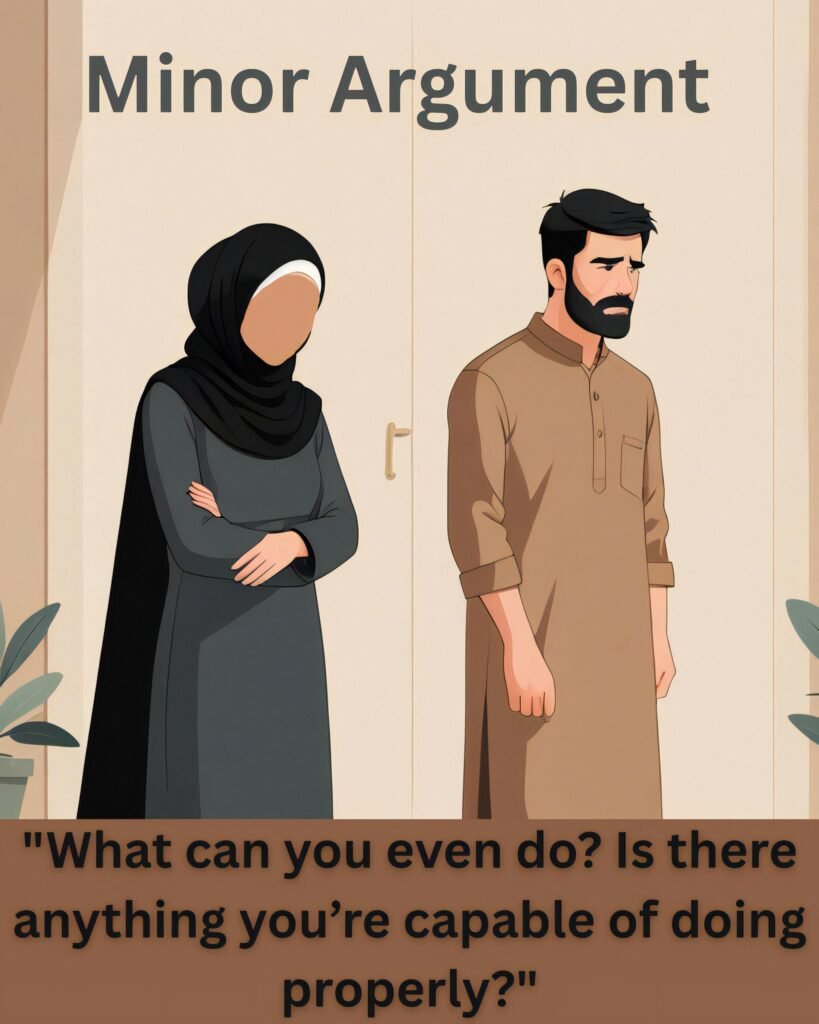
A man came to Sufyan ibn Uyaynah — one of the most celebrated scholars of hadith and wisdom in early Islamic history — and said: “O Abu Muhammad, I am making a complaint to you about my wife. I have become the most humiliated and despised person in her eyes.”
Sufyan lowered his head and remained quiet for a moment. Then he raised it and said: “Perhaps you chose her because you wanted honour through her?”
The man replied: “Yes, O Abu Muhammad. That is exactly why.”
Then Sufyan said those words that have echoed through Islamic scholarship ever since:
“Whoever marries for honour, humiliation will be his reward. Whoever marries for wealth, poverty will be his reward. But whoever marries seeking deen, Allah will combine honour and wealth alongside their deen.”
— Sufyan ibn Uyaynah — Hilyat al-Awliya, 7/289
This is not a theory. This is the observation of a man who spent his life studying human nature through the lens of Islamic wisdom. And if you look at marriages around you — among friends, in families, in communities — you will find this pattern playing out again and again.
View Muslim Fashion T-Shirt Design Here: Shop Now



Why Marrying for Status Leads to Humiliation
When a person chooses a spouse primarily because of their family name, their social circle, or the prestige they believe the marriage will confer — they are building the relationship on a transactional foundation. They are not really valuing the person; they are valuing what the person represents.
The problem is that people sense this, consciously or not. A spouse who realizes they were chosen for their status and not for who they are as a person — their faith, their character, their heart — will rarely give genuine respect in return. Respect earned through manipulation or strategy tends to be fragile. Respect built on sincere love, admiration, and shared values tends to last.
This is exactly what the man in the story experienced. He married upward, socially speaking. And the woman he married — perhaps sensing that she was a means to an end rather than a cherished companion — gave him the opposite of what he sought.
Why Marrying for Wealth Leads to Poverty
Similarly, when financial security is the primary driver of a marriage decision, the marriage is effectively a business arrangement. And business arrangements — particularly ones involving something as intimate and emotionally complex as a lifelong partnership — tend to fall apart when the terms change.
What happens when the wealth decreases? What happens when financial difficulty hits — as it does in almost every marriage at some point? If the foundation of the relationship was material, there is nothing left to hold it together when the material disappears.
Beyond this practical reality, there is a spiritual one. Islam teaches that provision (rizq) comes from Allah, not from the person you marry. Trusting a spouse’s bank account rather than Allah’s promise of provision is a subtle but serious misplacement of trust. And when that trust is misplaced, the consequences are often financial anxiety, resentment, and eventual loss of the very comfort that was sought.
Why Marrying for Deen Brings Everything Else
And then there is the third path — the one Sufyan ibn Uyaynah points toward with such confidence.
When a person chooses a spouse primarily because of their relationship with Allah — their taqwa, their character, their sincerity in faith — they are building on the most stable foundation that exists. Because a person who genuinely fears Allah will treat their spouse with justice, mercy, and faithfulness. Not because they are being watched. Not because the conditions of the marriage require it. But because they understand that how they treat their spouse is how they will be accountable to Allah.
This changes everything about the dynamic of the relationship.
“And among His signs is that He created for you mates from among yourselves, that you may find tranquility in them; and He placed between you love and mercy.”
— Surah Ar-Rum 30:21
Allah describes the ideal marriage not in terms of social standing or financial power, but in terms of sukoon (tranquility), mawaddah (deep love), and rahmah (mercy). These qualities only flourish when both partners are oriented toward pleasing Allah — when their shared deen becomes the anchor of the relationship.
And when that anchor is in place, something remarkable happens: the other things tend to follow. Honour comes, because a person who is righteous and treats their spouse well earns genuine respect. Provision comes, because Allah blesses the households of those who trust Him. Stability comes, because the marriage is not dependent on fluctuating external conditions.
This is not a promise that deen-based marriages are free of difficulty. Every marriage faces tests. But a marriage grounded in shared faith has the tools to navigate those tests — patience, prayer, forgiveness, and the shared understanding that this relationship exists for a purpose beyond worldly comfort.
The Prophet’s Guidance on Choosing a Spouse
The teachings of the Prophet Muhammad ﷺ align precisely with what Sufyan ibn Uyaynah observed. The Prophet did not condemn choosing a spouse who is also wealthy, beautiful, or from a good family — but he made the priority unmistakably clear:
“A woman is married for four things: for her wealth, for her family status, for her beauty, and for her religion. Marry the religious one, and you will prosper.”
— Prophet Muhammad ﷺ — Sahih al-Bukhari (5090), Sahih Muslim (1466)
The word the Prophet used — taribat yadak, often translated as “you will prosper” or “may you be successful” — carries the meaning of finding good, blessing, and benefit. It is a du’a, an encouragement, a promise from the best of human beings: choose deen, and you will find good.
Notice also that the hadith does not say beauty, wealth, and family status are irrelevant. It says deen should be chosen above them. A marriage to a righteous person who is also beautiful or financially stable is, of course, a blessing. The warning is against making status, wealth, or beauty the primary criterion while neglecting the quality that will actually determine how the marriage functions day to day.
A Practical Framework: Questions to Ask Before Marriage
Inspired by these teachings, here are the questions every Muslim should honestly answer before committing to a marriage:
- Why am I choosing this person? Is it primarily their character and faith — or their family name, their income, or their appearance?
- What do I expect marriage to give me? Security, status, happiness? Or a companion for this life and the next?
- Would I still want to marry this person if their wealth disappeared? If their family lost social standing? If their looks changed with age?
- Does this person’s relationship with Allah make me feel at peace? Do they remind me of Allah? Do they encourage me toward good?
- Am I ready to be the kind of spouse I am hoping to find? The intention to find a righteous spouse must be matched by the intention to be one.
Renewing Intention Within an Existing Marriage
This reflection is not only for those who are single. For those already married, the story of Sufyan ibn Uyaynah offers a different but equally important lesson: what drove you to this marriage can still be redirected.
If you married for status or comfort and find those things have not delivered what you hoped — there is still a choice available to you. You can choose, from this point forward, to build the marriage on the foundation it should have had. You can choose to see your spouse not as the source of your honour or security, but as a trust from Allah — and to treat them accordingly.
This shift in intention, even mid-marriage, can transform the experience of the relationship. It replaces expectation with gratitude, transactional thinking with mercy, and disappointment with purpose.
Final Reflection: The Question That Matters Most
Before you marry — or as you reflect on the marriage you are already in — return to the question Sufyan ibn Uyaynah implicitly asked that troubled man over a thousand years ago:
Why are you doing this?
If the honest answer is anything other than seeking a companion for the sake of Allah and the betterment of your deen, it is not too late to adjust the intention. Niyyah (intention) is something that can be renewed and redirected — and in Islam, the intention behind an action shapes its outcome in ways that no external strategy can replicate.
Choose deen. And let Allah handle the rest.
May Allah grant us all righteous spouses, correct our intentions, and make our marriages a source of barakah in this life and a path to Jannah in the next. Ameen.
FAQ
Q: What is the right reason to get married in Islam?
The right reason to marry in Islam is to seek a righteous, God-fearing spouse — to marry for the sake of deen. The scholar Sufyan ibn Uyaynah taught that whoever marries for deen will receive honour and wealth alongside their faith (Hilyat al-Awliya 7/289), while those who marry for status or wealth often receive the opposite.
Q: What did Sufyan ibn Uyaynah say about marriage?
Sufyan ibn Uyaynah said: “Whoever marries for honour, humiliation will be his reward. Whoever marries for wealth, poverty will be his reward. But whoever marries seeking deen, Allah will combine honour and wealth alongside their deen.” (Hilyat al-Awliya 7/289)
Q: What does the Prophet Muhammad ﷺ say about choosing a spouse?
The Prophet ﷺ said: “A woman is married for four things: wealth, family status, beauty, and religion. Marry the religious one and you will prosper.” (Sahih al-Bukhari 5090, Sahih Muslim 1466) This teaching prioritizes faith above all other criteria.
Q: Is it wrong to consider wealth or beauty when choosing a spouse in Islam?
No — Islam does not forbid considering these factors. The concern is when they become the primary reason for choosing a spouse while religious commitment is ignored. The Prophet’s guidance places deen first; beauty, wealth, and status are secondary considerations.
Q: How can I correct my marriage intention if I married for the wrong reason?
It is never too late to renew your niyyah (intention). Begin treating your marriage as a trust from Allah rather than a transaction. Shift your focus from what you expected to receive to what you can contribute. A renewed, sincere intention can transform the experience of any marriage.